
Chronic inflammatory skin condition
Is your face always red, hot and stinging?Rosacea can be kept under control long-term.
Rosacea is not just sensitive skin, and it is not caused by poor cleansing. It is a long-term condition linked to genes, blood vessels, nerves and the immune system. Finding your triggers and getting the right treatment can help your skin settle down.
What causes rosacea?
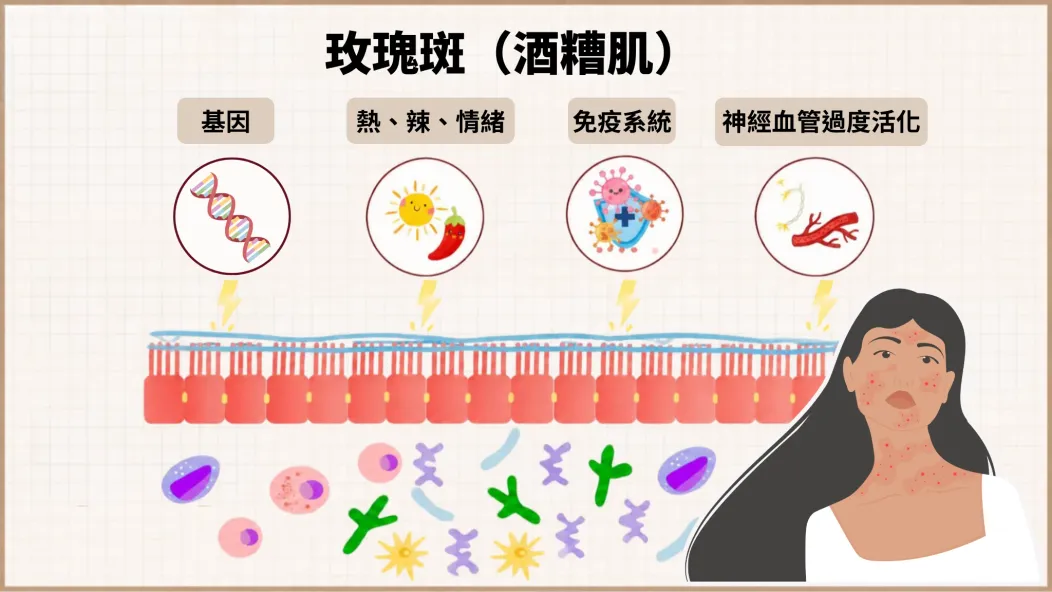
Rosacea does not have a single cause. In skin with an inherited tendency, outside triggers such as heat, sun, spicy food, alcohol and emotional stress set off an overactive innate immune response, while blood vessels and nerve endings become oversensitive. As vessels widen again and again and inflammatory signals keep building up, the result is repeated redness, bumps, burning and stinging.
- GenesFamily history and inborn differences in the skin barrier and how blood vessels react.
- Heat, spice, emotionHeat, sun, spicy food, alcohol, temperature changes and emotional stress can all set off flushing.
- Immune systemAn overactive innate immune response, with more antimicrobial peptides and inflammatory signals.
- Overactive nerves and vesselsBlood vessels and nerve endings overreact to triggers, causing repeated redness, burning and stinging.
Types of rosacea
Tap a card to read more. More than one type can appear at the same time, and they can change over time.
Redness & visible vessels
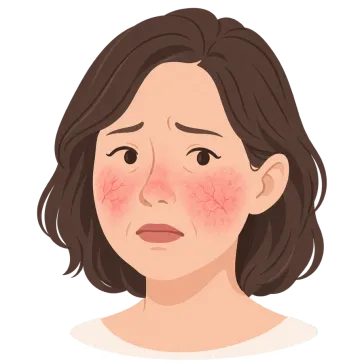
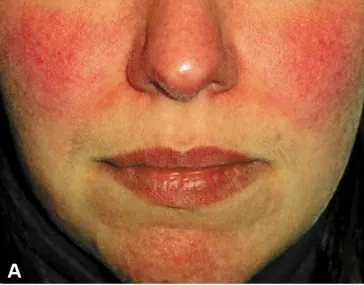
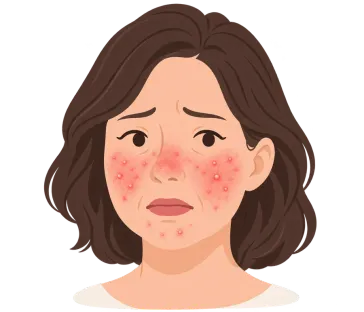
Erythematotelangiectatic rosacea. Lasting redness across the center of the face (cheeks, nose, forehead, chin), with flushing set off by heat, emotion or food, often visible small blood vessels, and stinging, burning or tightness. The skin barrier is usually fragile, so skincare products easily irritate.
Bumps & pus spots
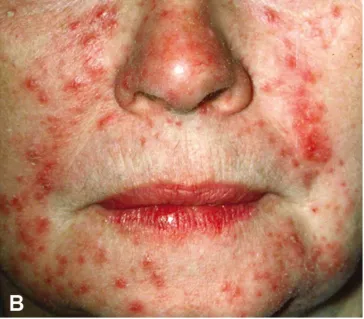
Papulopustular rosacea. Inflamed red bumps and pus spots on a background of redness, mostly in the center of the face. The key difference from acne is that there are no blackheads or whiteheads, and redness and burning often come with it. It is also treated differently from acne.
Thickened skin (rhinophyma)
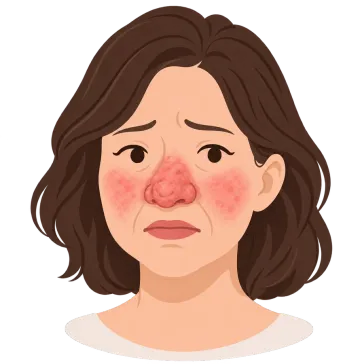
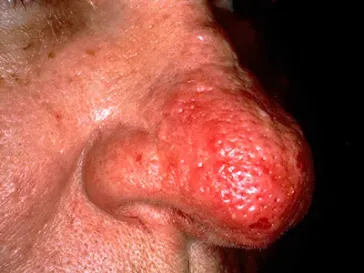
Phymatous rosacea. Oil glands and connective tissue overgrow, making the skin thick, with large pores and a bumpy surface. It is most common on the nose (rhinophyma) but can affect the chin, forehead or ears. It is more common in men and tends to appear later in the condition.
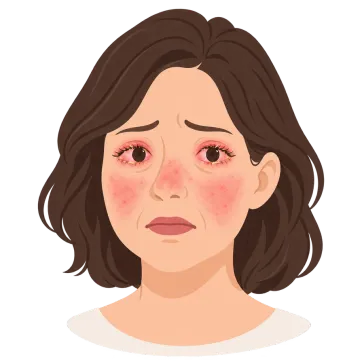
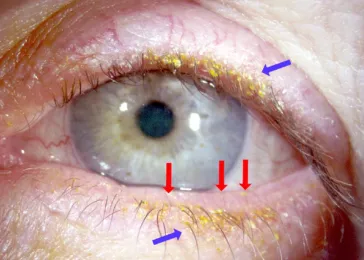
Eye rosacea
Ocular rosacea. Dry, gritty, burning or light-sensitive eyes, inflamed eyelid margins, bloodshot eyes and repeated styes. Eye symptoms may come before skin symptoms or be out of proportion to them, and are best managed together with an eye doctor.
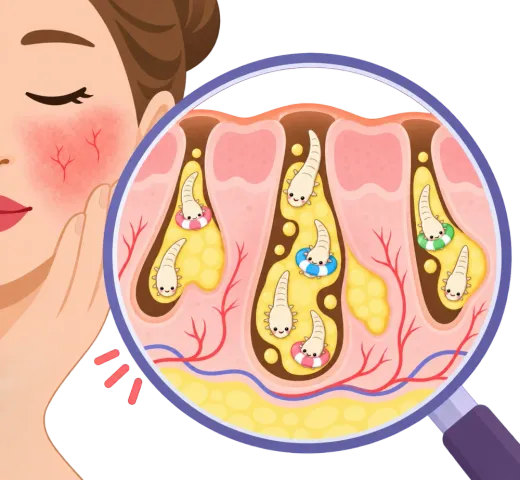
Demodex mites
Demodex mites are tiny mites that normally live on human skin. Most people have them, and they usually cause no problems. But studies show that people with rosacea often have noticeably more of them on the face. The mites, their waste and the bacteria inside them can further stimulate the immune system and worsen inflammation — a link most often discussed for the bumps-and-pus-spots type.
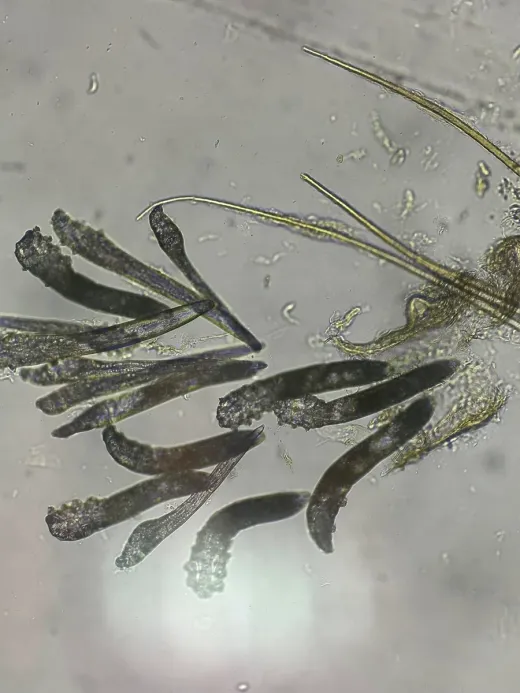
Whether you need a Demodex test is for your doctor to judge from how your skin looks. If needed, a Demodex skin test checks whether the number of mites is raised. In a positive test, large numbers of mites can be seen under the microscope, as in the pictures and video below.
If an overgrowth of mites is confirmed, it can be treated with Soolantra, an ivermectin cream that both lowers the number of mites and calms inflammation.
Daily care
Alongside treatment, steady daily care is key to keeping rosacea under control long-term.
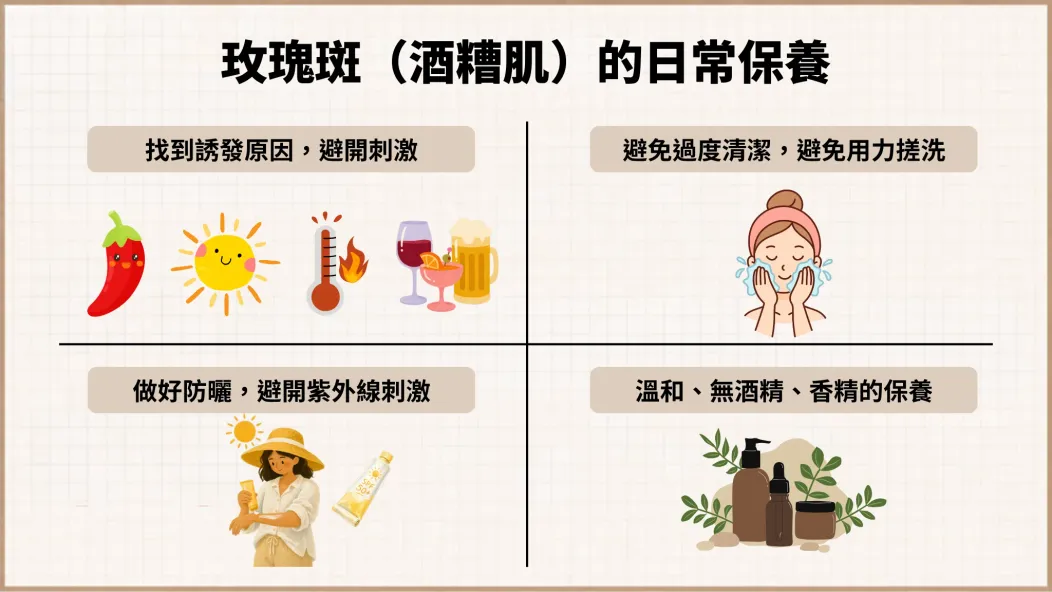
- Find your triggers and avoid them: watch for spicy food, sun, heat and alcohol, as well as hot drinks, stress and temperature changes. Keep a note to work out your own pattern, then steer clear where you can.
- Don’t over-cleanse or scrub: wash gently with lukewarm water and a mild cleanser. Avoid rubbing, scrubs and heavy exfoliation.
- Protect against UV: sunlight is one of the most common triggers. Use sunscreen every day — mineral sunscreens tend to suit sensitive skin — and add a hat or umbrella.
- Keep skincare gentle and free of alcohol and fragrance: choose simple, mild moisturizers without alcohol or fragrance to repair the skin barrier and reduce repeated stinging and redness.
Treatment options
⚠ The actual medicines and treatments must be decided by your doctor based on your type of rosacea, how severe it is and your circumstances. The information below is general education, not personal medical advice.
- Flushing
- Persistent redness
- Bumps / pus spots
- Thickened skin
- Demodex mites
Tap a category to see its treatments
| Treatment | Helps with | How it works |
|---|---|---|
| BrimonidineNarrows blood vessels |
| Acts on α2 receptors in blood vessel walls to narrow small vessels, temporarily reducing redness. |
| MetronidazoleTopical anti-inflammatory |
| Anti-inflammatory and antioxidant, reducing bumps and pus spots (exactly how it works is not fully understood). |
| Azelaic acidAnti-inflammatory acid |
| Dampens inflammatory signals and the activation of antimicrobial peptides (cathelicidin), and is also an antioxidant. |
| RetinoidsVitamin A derivatives |
| Regulate how skin cells mature and how follicles shed, and calm inflammation. |
| SoolantraIvermectin creamWhat it looks like |
| Kills Demodex mites living in the hair follicles and also calms inflammation. |
| Treatment | Helps with | How it works |
|---|---|---|
| PropranololBeta blocker |
| Blocks beta receptors, reducing flushing and vessel widening driven by the nervous system. |
| CarvedilolAlpha and beta blocker |
| Blocks both α1 and beta receptors, adjusting blood vessel tone to reduce flushing and redness. |
| Doxycycline / MinocyclineTetracycline antibiotics |
| At low doses they mainly calm inflammation (for example by reducing matrix metalloproteinase activity) rather than killing bacteria. |
| Azithromycin / ClarithromycinMacrolide antibiotics |
| Both fight bacteria and help regulate inflammation. |
| IsotretinoinOral retinoid |
| Shrinks oil glands and reduces oil production, calms inflammation, and can also improve tissue overgrowth. |
| Treatment | Helps with | How it works |
|---|---|---|
| Botulinum toxinNerve-blocking injection |
| Stops nerve endings releasing acetylcholine, reducing nerve-driven vessel widening and flushing. |
| Treatment | Helps with | How it works |
|---|---|---|
| SurgeryExcision or reshaping |
| Removes or shaves down the overgrown tissue to restore shape and improve how the nose works. |
| ElectrosurgeryElectrocautery |
| Uses electric current to burn away and shave down overgrown tissue, reshaping it. |
| CO₂ laserCarbon dioxide laser |
| Vaporizes overgrown tissue with a laser, with control over how deep it goes. |
| Er:YAG laserErbium laser |
| Vaporizes surface tissue with less heat damage, suited to fine reshaping. |
⚠ Do not use topical steroids long-term on your own. They may make redness look better at first, but over time they thin the skin, make blood vessels more visible and cause worse rebound redness when stopped — and can even cause steroid-induced rosacea.
Frequently asked questions
- Standard classification and pathophysiology of rosacea: The 2017 update by the National Rosacea Society Expert Committee
- National Rosacea Society | Faces of Rosacea
- Taiwanese Dermatological Association: 2023 consensus handbook on the treatment of rosacea
About the imagesThe illustrations of people on this page are for illustration only; the clinical photos are taken from the sources above to show what each type looks like.
Soolantra
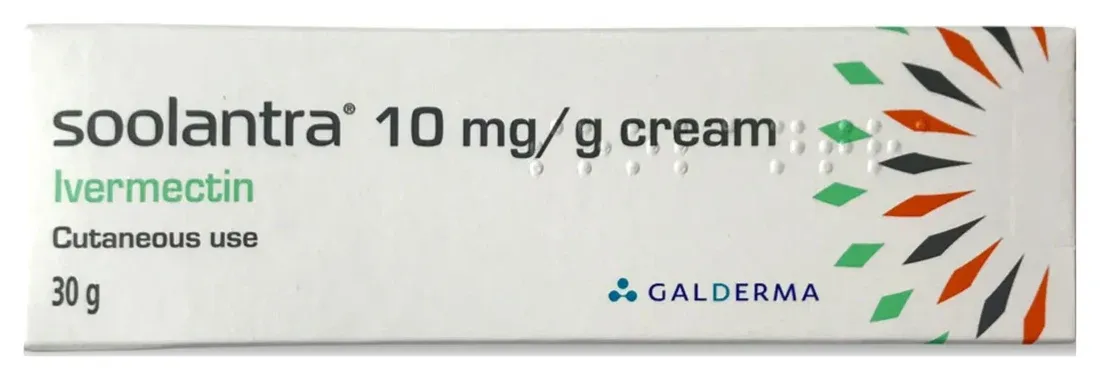
Form: Topical cream (ivermectin)