Autoimmune condition
When your immune system turns on your own hair folliclesTreatment keeps advancing — there is real hope for your follicles.
Alopecia areata is an autoimmune condition that often comes back. A specialist assessment and the right treatment can help bring it under control and support hair regrowth.
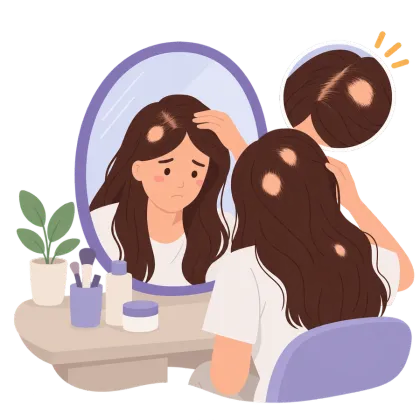
What causes it?
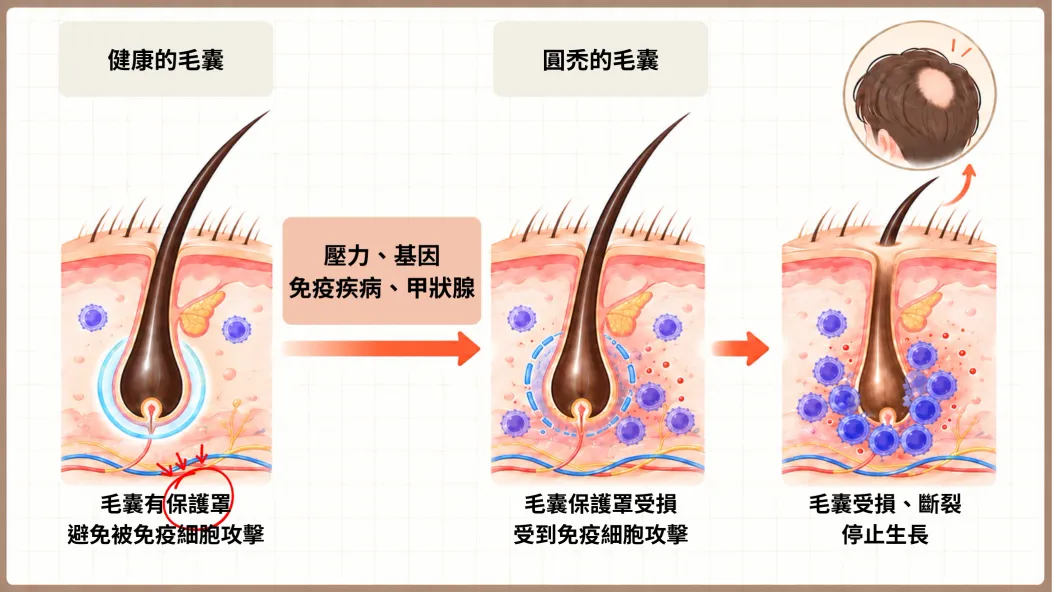
Alopecia areata is an autoimmune condition. Immune cells (mainly T cells) mistakenly attack hair follicles in the growth phase, pushing them into the resting phase early so they stop growing. The follicle itself is usually not destroyed, so in most cases the hair loss can be reversed. It is linked to inherited tendency, and environmental triggers such as stress or infection may set it off or make it worse. People with alopecia areata are also more likely to have other autoimmune conditions, such as thyroid disease or vitiligo.
Forms and severity
Tap a card to read more
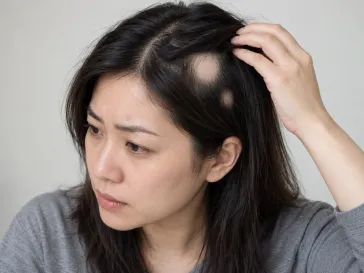
Single or multiple patches
One or more round or oval bald patches with clear edges appear on the scalp. This is the most common form. With multiple patches, the number and size vary, and some may merge into larger areas.
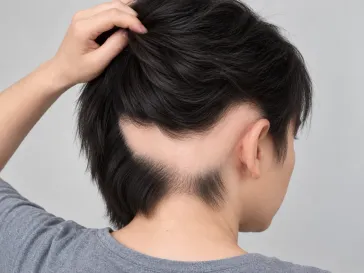
Ophiasis
Hair is lost in a band along the back and sides of the hairline, snaking around the head. It tends to respond less well to treatment.
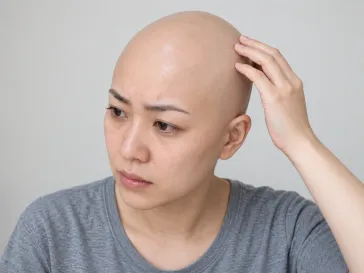
Alopecia totalis
All the hair on the scalp is lost; a severe form of alopecia areata.
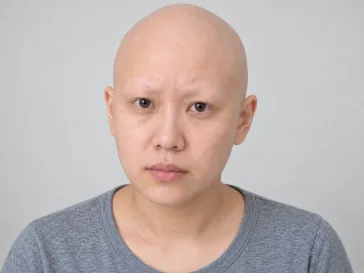
Alopecia universalis
Hair is lost all over the body (scalp, eyebrows, eyelashes and body hair); the most severe form of alopecia areata.
How severe is it?
Doctors grade severity by how much of the scalp has lost hair, usually measured with the SALT score (Severity of Alopecia Tool).
Mild
< 20%
Less than 20% of scalp hair lost
SALT score ≤ 20%
Moderate
20–50%
More than 20% but less than 50% of scalp hair lost
SALT score > 20% and ≤ 50%
Severe
> 50%
More than 50% of scalp hair lost
SALT score > 50%
If any of the following applies, the severity goes up one level
- Alopecia areata is affecting your emotional wellbeing or social life
- Eyebrows or eyelashes are falling out
- There has been no adequate response after at least 6 months of treatment
- Hair loss is spreading quickly over a wide area, with a positive hair pull test
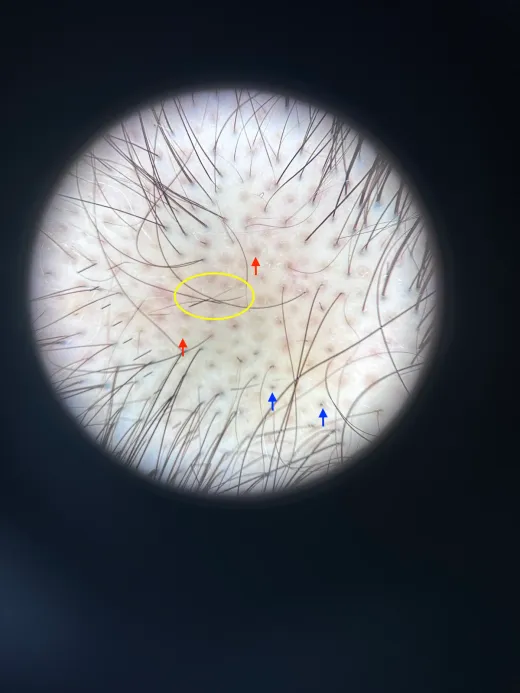
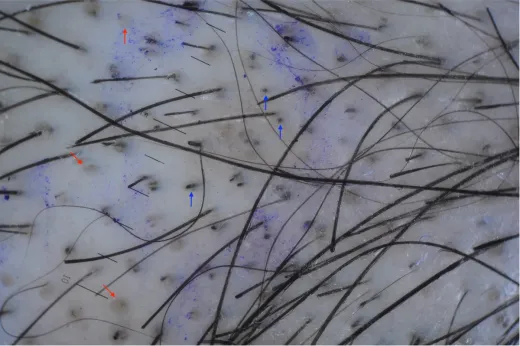
What doctors see under the dermatoscope
- Exclamation mark hairs: the hair shaft gets thinner and paler near the scalp, like an exclamation mark (yellow circles)
- Yellow dots: enlarged, empty follicle openings filled with oil and skin debris (red arrows)
- Black dots: hairs broken off at the follicle opening (blue arrows)
- Short new hairs (regrowing vellus hairs) at the edge of a patch, often a sign that it is improving
Comparing treatments
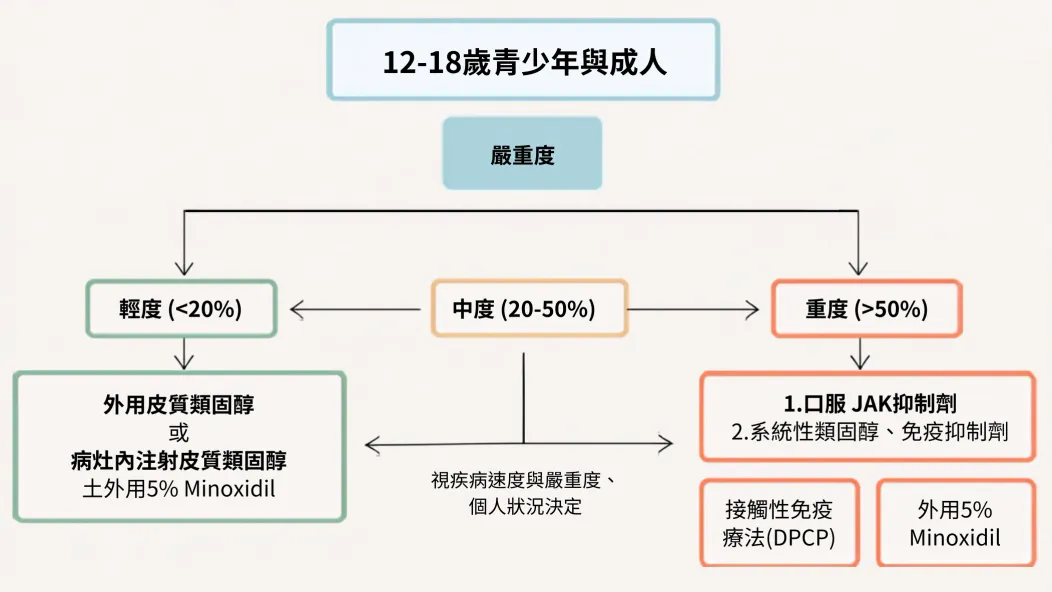
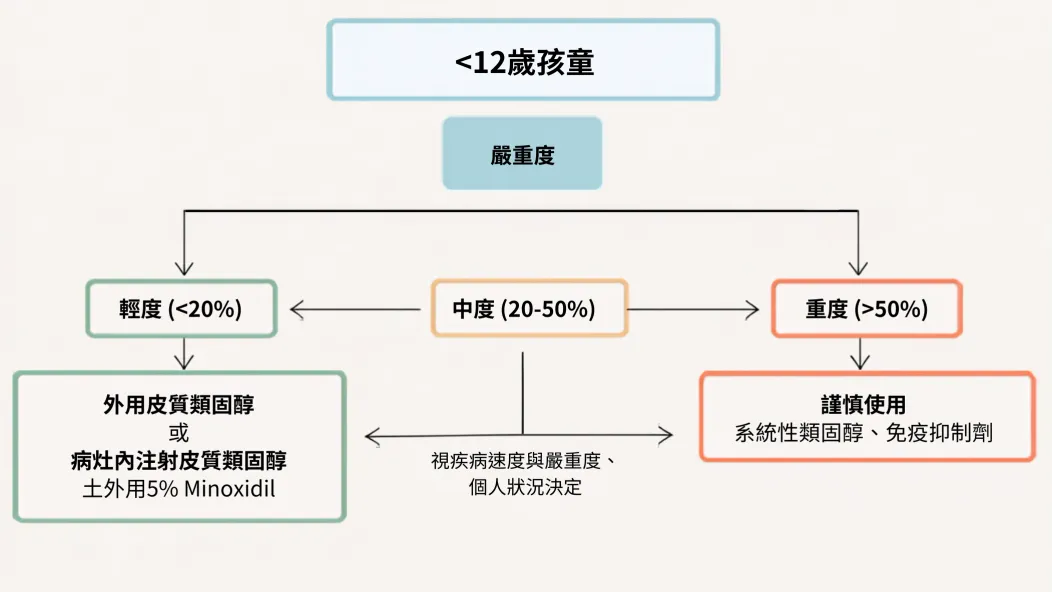
Treatment depends on age and severity; your doctor will decide on the medicines after assessing you
⚠ Results and costs vary between clinics, with the doctor’s technique and from person to person. The chart below is for general education only and is not a promise of any result or price. Your actual treatment plan and costs will be based on an in-person assessment by your doctor.
⚠ Systemic (whole-body) treatments have more noticeable side effects. Your doctor will weigh how severe and widespread the condition is and your overall health before using them, and will monitor you regularly.
Frequently asked questions
SourcesTaiwanese Dermatological Association | Consensus on the diagnosis and treatment of alopecia areata
About the imagesSome photographs are AI-generated illustrations, not images of real patients, so no patient’s privacy is involved.