In clinic, I often see women who start losing hair, with their hair getting thinner and thinner, after beginning hormone therapy for breast cancer. The questions I hear most are:
- “My hair is getting thinner — is it the hormone therapy, or something else?”
- “I’ve been on this medicine for a long time. Could the hair loss really be starting only now?”
- “Doctor, if the medicine really is causing my hair loss, what can I do? My hormone therapy isn’t finished yet — will I lose all my hair if this goes on?”
Hair loss caused by hormone therapy has not had much attention, but it is far more common than most people think. Many people with breast cancer find that hormone therapy keeps their cancer well controlled, yet their quality of life and emotional wellbeing still suffer because of hair loss. So let’s look at how hormone therapy affects hair, and what treatment and care options are available today.
Hormone therapy
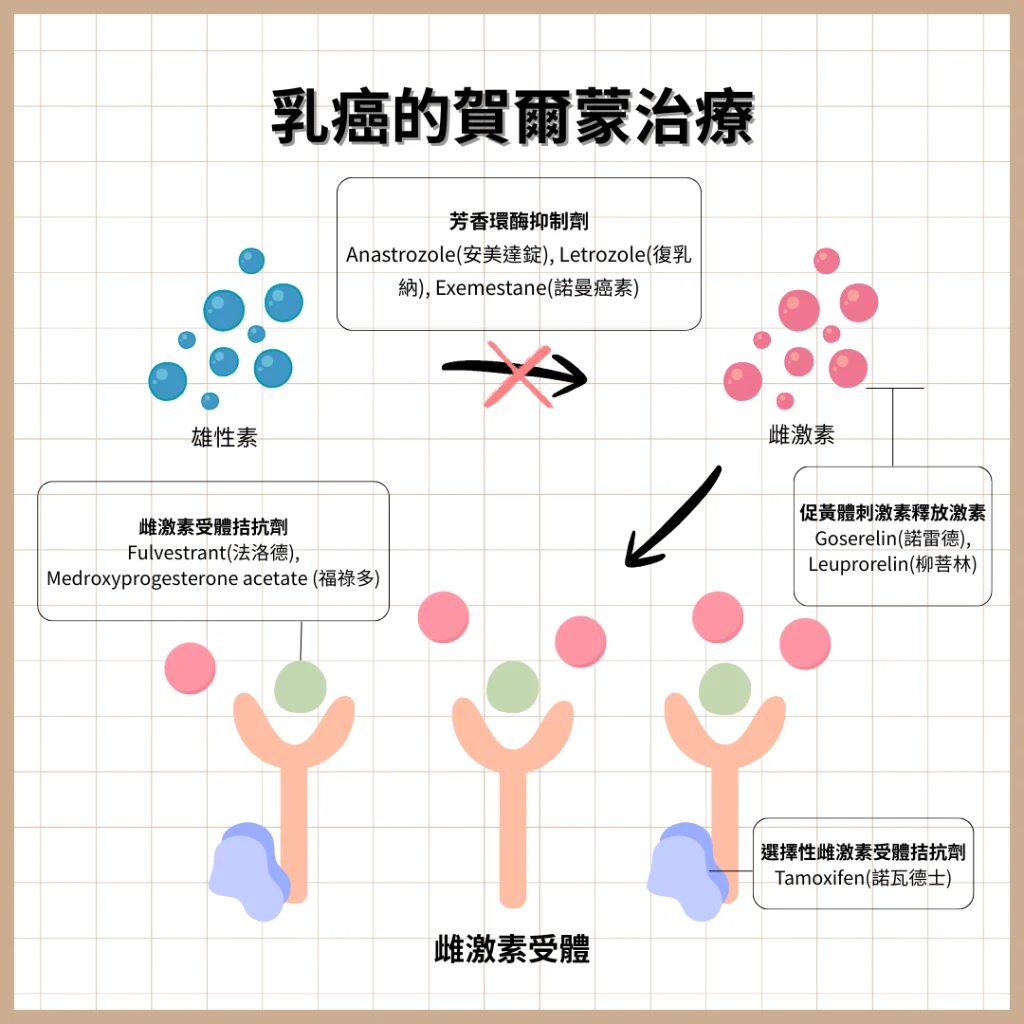
The hormone therapies commonly used for breast cancer include:
- Aromatase inhibitors (AIs): anastrozole (Arimidex), letrozole (Femara) and exemestane (Aromasin). Aromatase is the enzyme that turns androgens into estrogen, especially after menopause. These medicines are mostly used after menopause to cut estrogen production, reducing the estrogen signal that drives breast cancer cells to grow.
- Selective estrogen receptor modulators (SERMs): for example tamoxifen (Nolvadex). It competes with estrogen for its receptor, lowering estrogen’s effect in certain tissues.
- Estrogen receptor antagonists / degraders (SERDs): for example fulvestrant (Faslodex) and medroxyprogesterone acetate (Farlutal). These medicines block estrogen receptor signaling.
- GnRH agonists: in Taiwan, commonly goserelin (Zoladex) and leuprorelin (Leuplin), sometimes called the “menopause injection”. They stop the pituitary gland releasing follicle-stimulating hormone and luteinizing hormone, which switches off the ovaries and lowers estrogen to menopausal levels. They are one way of suppressing the ovaries in patients who have not yet reached menopause.
Why hormone therapy causes hair loss
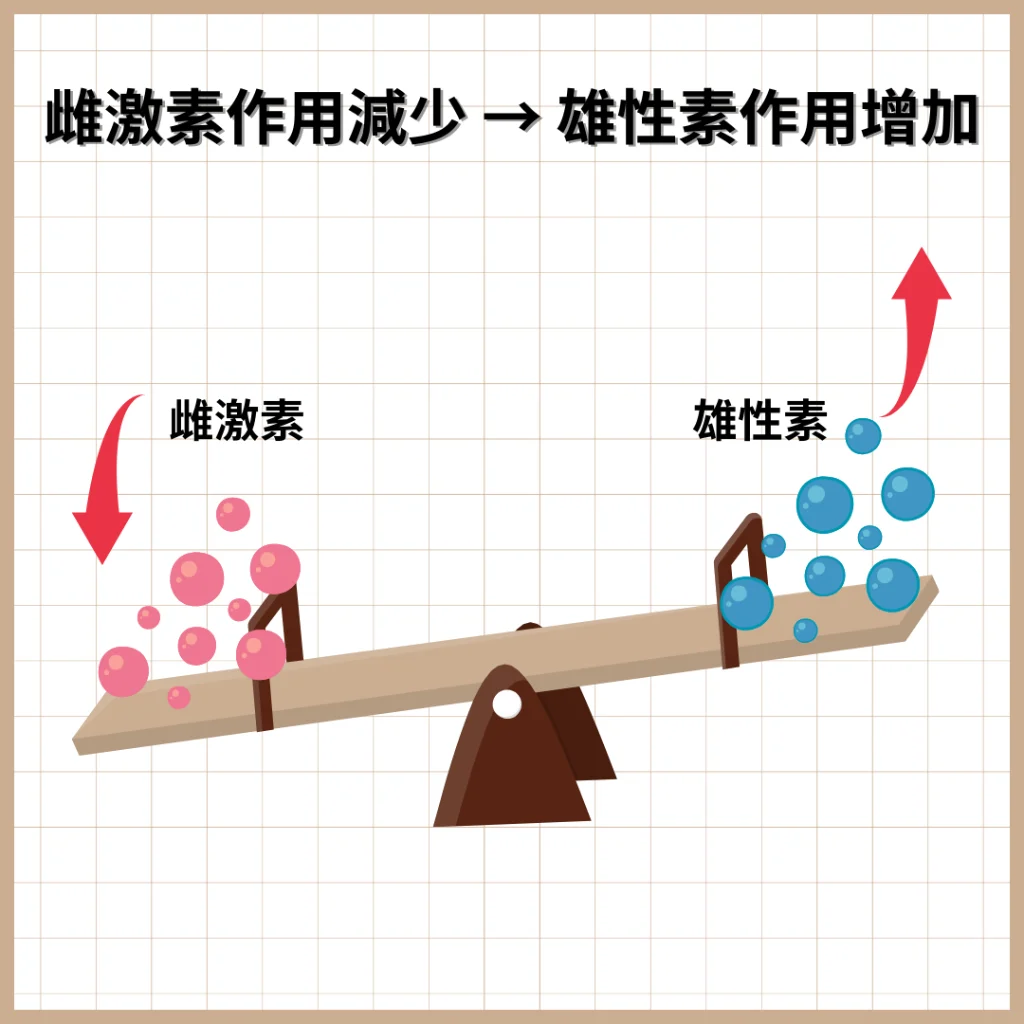
Hormone therapy blocks estrogen or its receptors, lowering estrogen’s effect in the body. Estrogen and androgens work like a seesaw: when estrogen’s effect goes down, androgens become relatively stronger. Acting on the scalp’s hair follicles, this produces hair loss that looks like pattern hair loss.
What the hair loss looks like
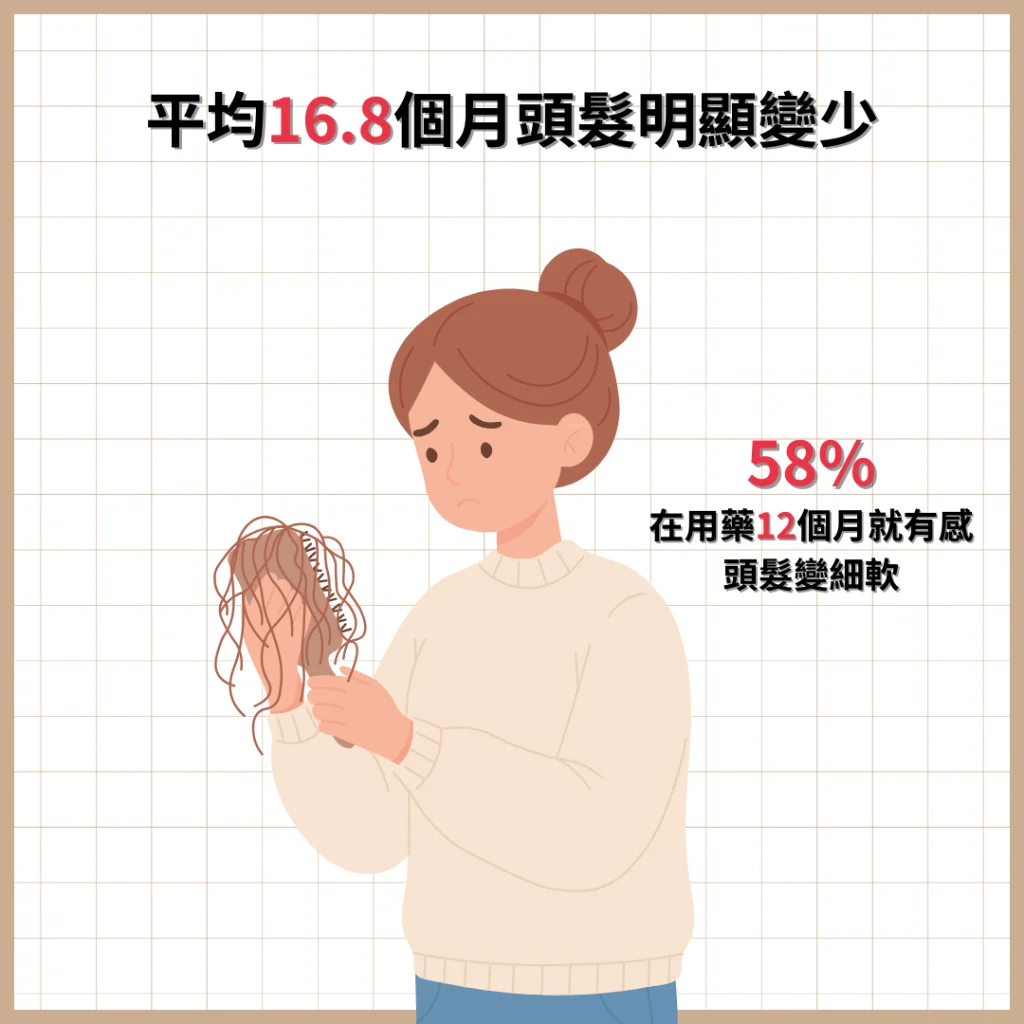
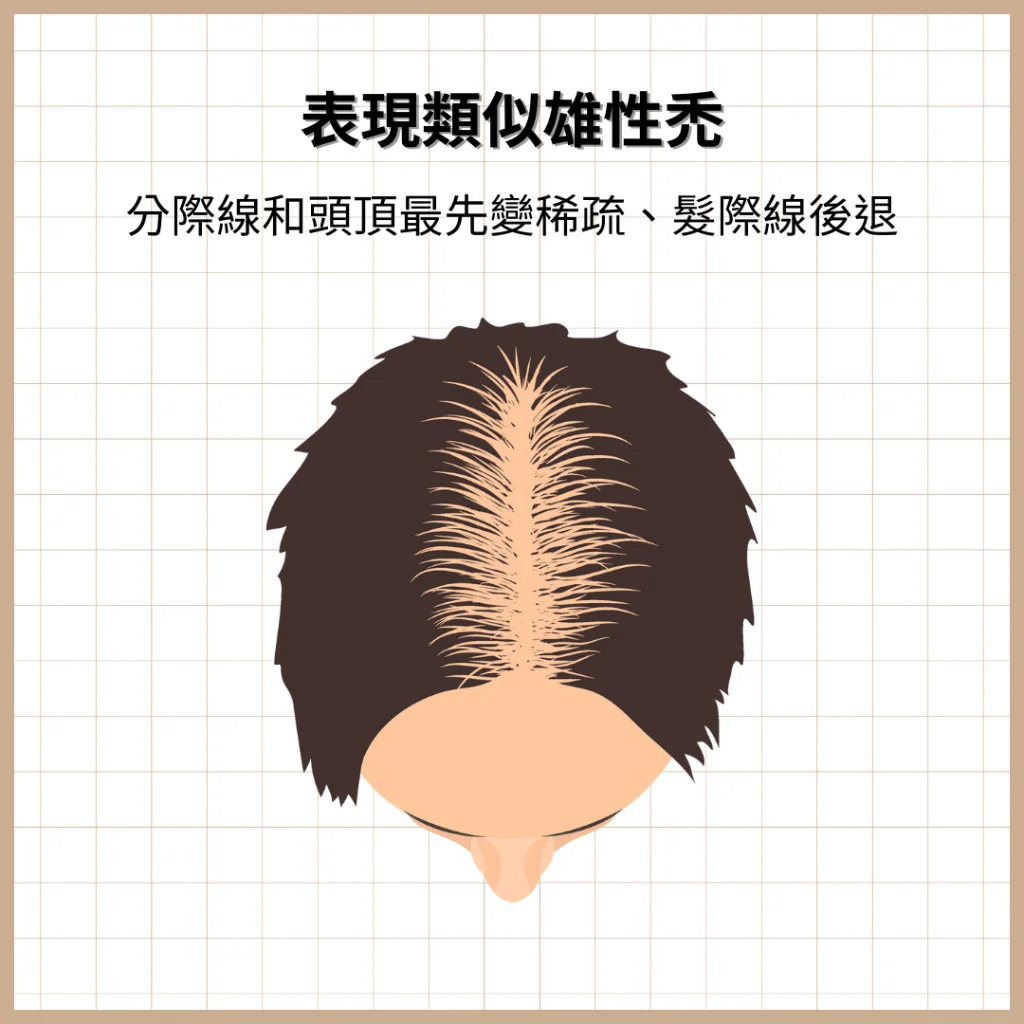
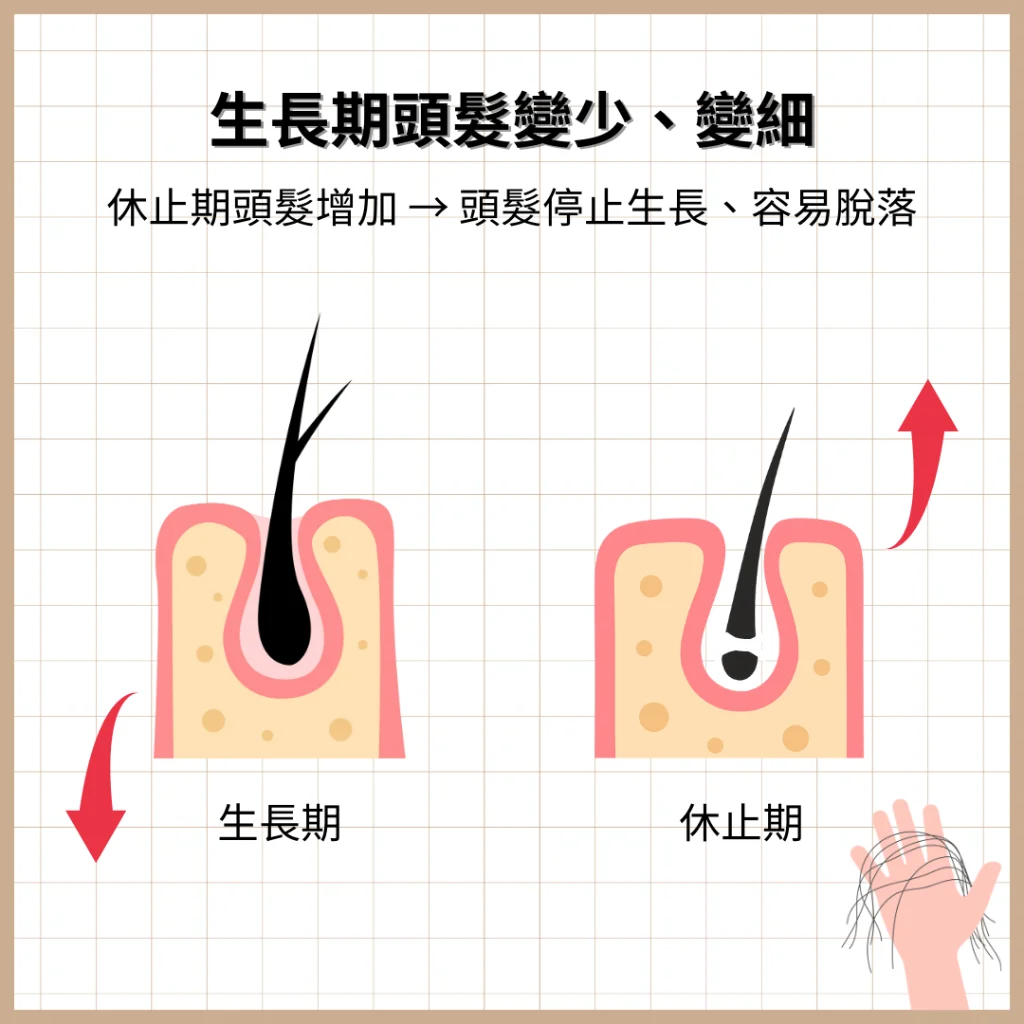
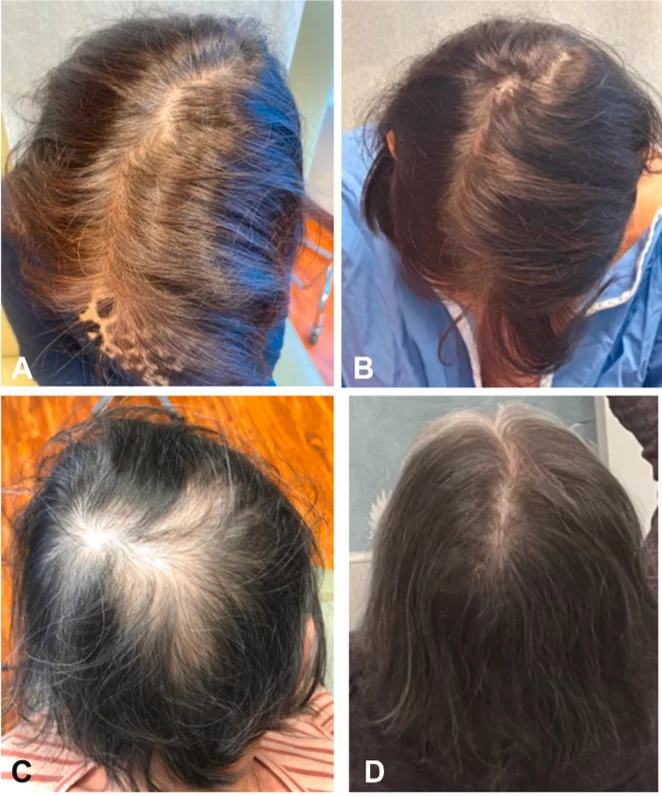
Research shows that about 9 in 10 patients notice hair loss after starting hormone therapy, on average about 16.8 months in, and about half notice thinning within the first 12 months. Because androgens become relatively stronger as estrogen’s effect drops, this hair loss resembles pattern hair loss: hair along the parting and on the crown becomes finer and thinner, the front hairline may recede, and more hair comes out when washing or brushing. This is follicle miniaturization — fewer hairs are in the growth phase and more are in the resting phase.
The shift in the estrogen–androgen balance can also cause other signs of excess androgens in women. Androgen-sensitive hair on the arms, legs and face may grow more, as it does in men — known as hirsutism.
Is it really the medicine — or could something else be going on?
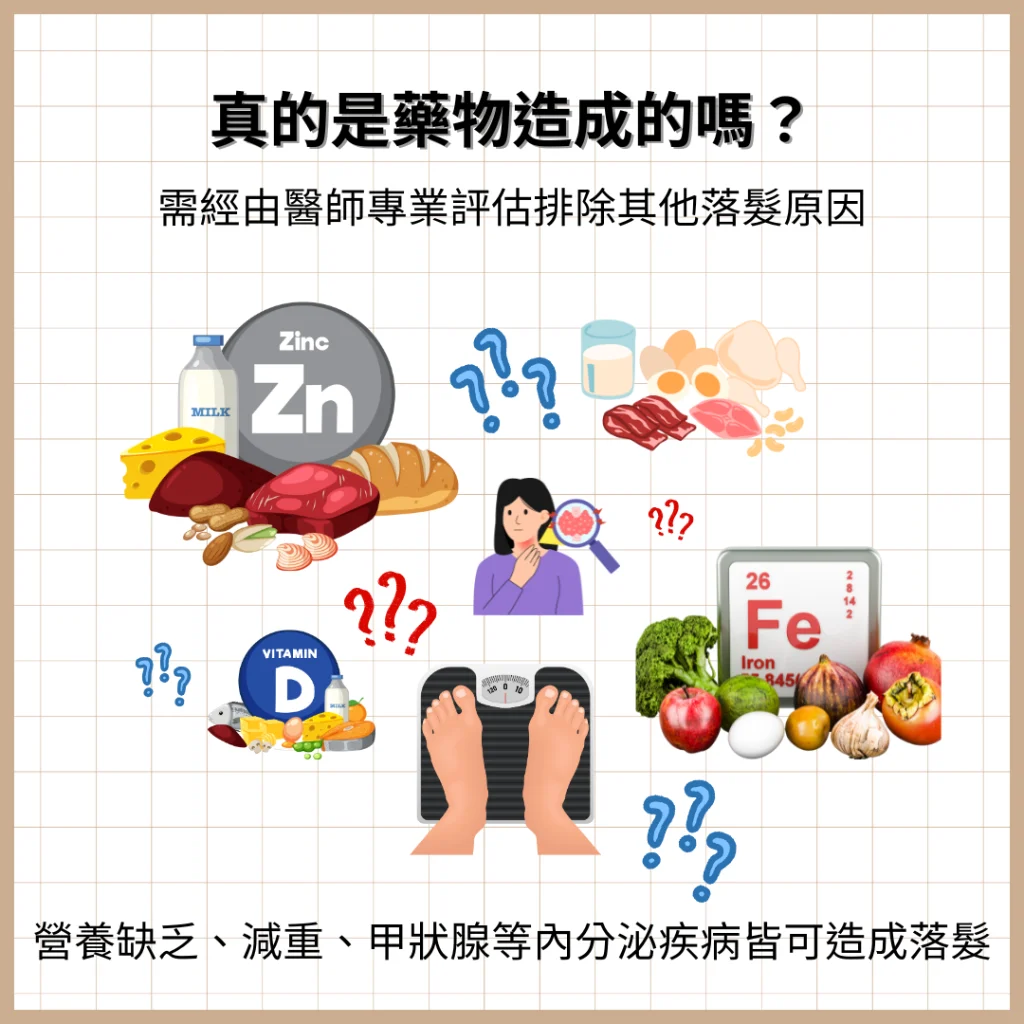
Hair loss from hormone therapy is non-scarring. It is still worth checking for other causes so that nothing treatable is missed. A doctor will look at the pattern of hair loss, your medical history, and which medicines you take and for how long, and will rule out and correct other causes such as hormone problems, nutritional deficiencies and infections.
Other common causes of hair loss include:
- Recent stress, a big change in weight, or surgery
- Low iron stores (ferritin), zinc, vitamin D or protein intake
- Thyroid problems
- Scalp inflammation, seborrheic dermatitis and similar conditions
Treatment: you don’t just have to put up with it
Many patients assume hair loss is simply the price of treatment and suffer in silence. In fact, there are several ways to improve it.
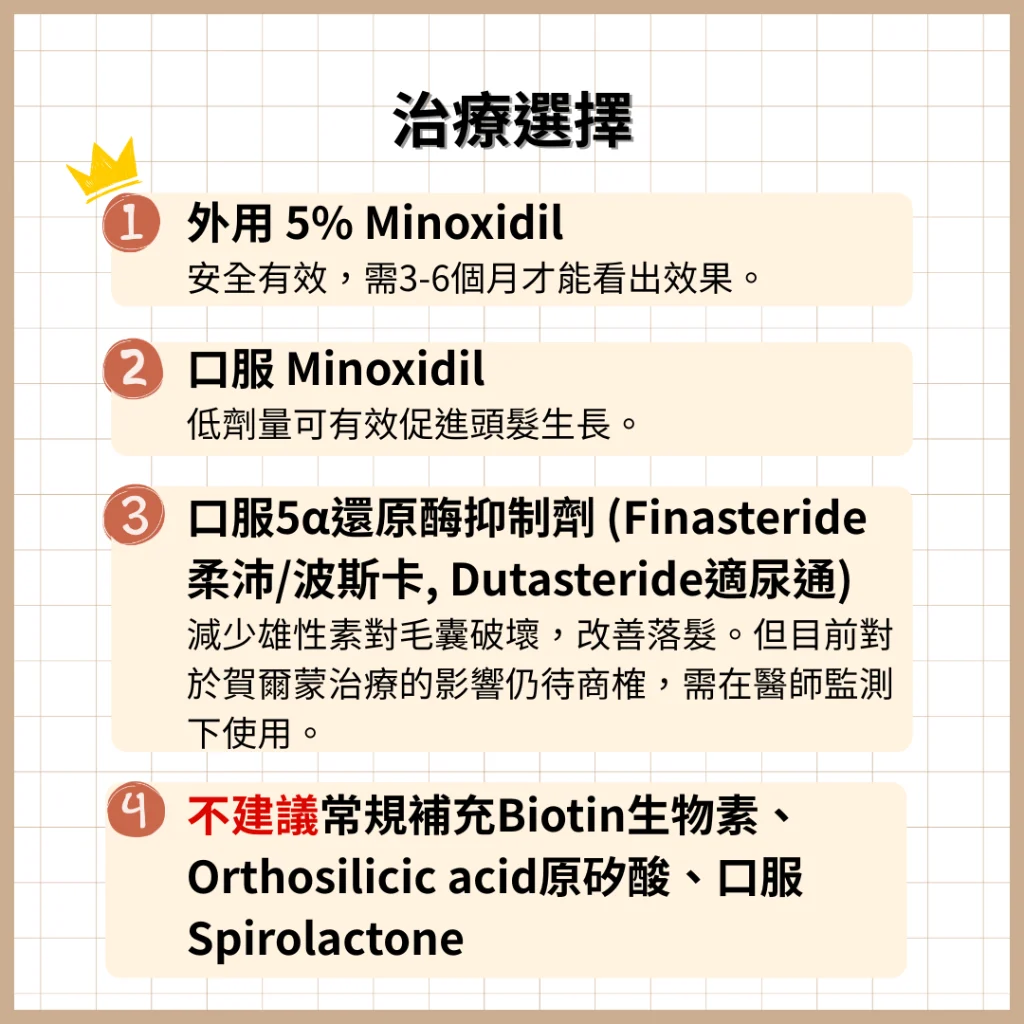
- Topical 5% minoxidil: the option with the most complete evidence and the easiest to start. In a retrospective study, 80% of patients using topical minoxidil 5% had moderate to marked improvement, and no side effects were seen in the study.
- It usually takes 3–6 months to see a change; the first goal is less shedding and thicker hairs.
- There may be a temporary increase in shedding at first as hairs cycle over — this is not a sign of getting worse.
- If your scalp gets irritated or itchy, the product or how you use it can be adjusted.
- Oral minoxidil (low dose): an option to step up treatment. If topical treatment isn’t enough, or it is hard to apply regularly, your doctor may consider low-dose oral minoxidil.
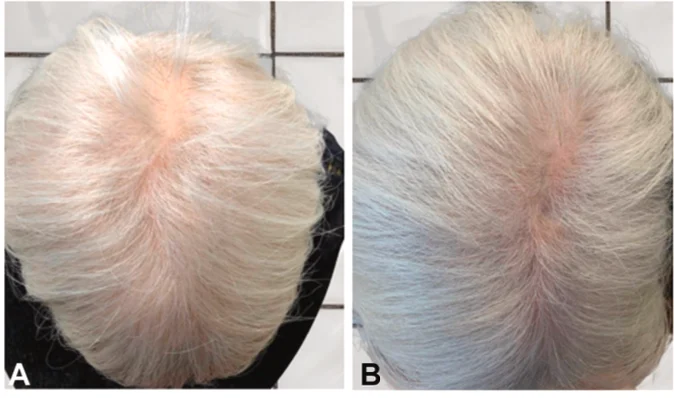
- 5-alpha reductase inhibitors (finasteride, e.g. Propecia; dutasteride, e.g. Avodart): some studies suggest that 5-alpha reductase inhibitors such as finasteride or dutasteride, or oral minoxidil 1.25–2.5 mg, used alone or with topical minoxidil 5%, can help follicles grow. The open question is whether 5-alpha reductase inhibitors affect the outcome of hormone therapy for breast cancer. Some studies suggest they may slightly raise estrogen levels, but the real effect on cancer treatment is not known, and more research is needed. If you want to use a 5-alpha reductase inhibitor, it must be assessed and monitored by both your dermatologist and your oncologist.
- Biotin and orthosilicic acid: routine supplements of biotin (2.5 mg a day) and orthosilicic acid (10 mg a day) are not recommended.
- Spironolactone: not recommended. It is a diuretic that also blocks androgens, but it is not yet clear whether its benefits outweigh its risks in people with breast cancer.
- Supportive treatments: low-level laser therapy (LLLT) or platelet-rich plasma (PRP) injections can offer extra help by supporting blood flow and regrowth around the follicles.
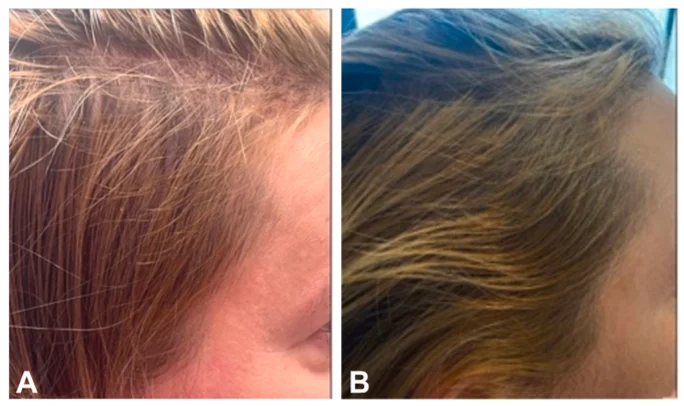
(Images from JAAD Case Reports 2026;67:110-4.)
References
- Freites-Martinez A, Shapiro J, Chan D, Fornier M, Modi S, Gajria D, Dusza S, Goldfarb S, Lacouture ME. Endocrine Therapy-Induced Alopecia in Patients With Breast Cancer. JAMA Dermatol. 2018 Jun 1;154(6):670-675. doi: 10.1001/jamadermatol.2018.0454. PMID: 29641806; PMCID: PMC6145643.
- Lacouture ME, Sibaud V, Gerber PA, van den Hurk C, Fernández-Peñas P, Santini D, Jahn F, Jordan K; ESMO Guidelines Committee. Electronic address: [email protected]. Prevention and management of dermatological toxicities related to anticancer agents: ESMO Clinical Practice Guidelines☆. Ann Oncol. 2021 Feb;32(2):157-170. doi: 10.1016/j.annonc.2020.11.005. Epub 2020 Nov 25. PMID: 33248228.
- Katz A, Dubin C, David KA, Ungar B, Gulati N, Lamb AJ. The use of oral dutasteride, minoxidil, and finasteride for treating endocrine therapy-induced hair loss from breast cancer treatment: A case series study. JAAD Case Rep. 2025 Nov 7;67:110-114. doi: 10.1016/j.jdcr.2025.11.001. PMID: 41451030; PMCID: PMC12731785.
Your hair is worth protecting — together
Hair loss shouldn’t be an extra burden on your path through cancer treatment. Your doctor will plan hair care around your situation, aiming to help you feel like yourself again without getting in the way of your cancer treatment.
Book an appointment online →